Cart
0
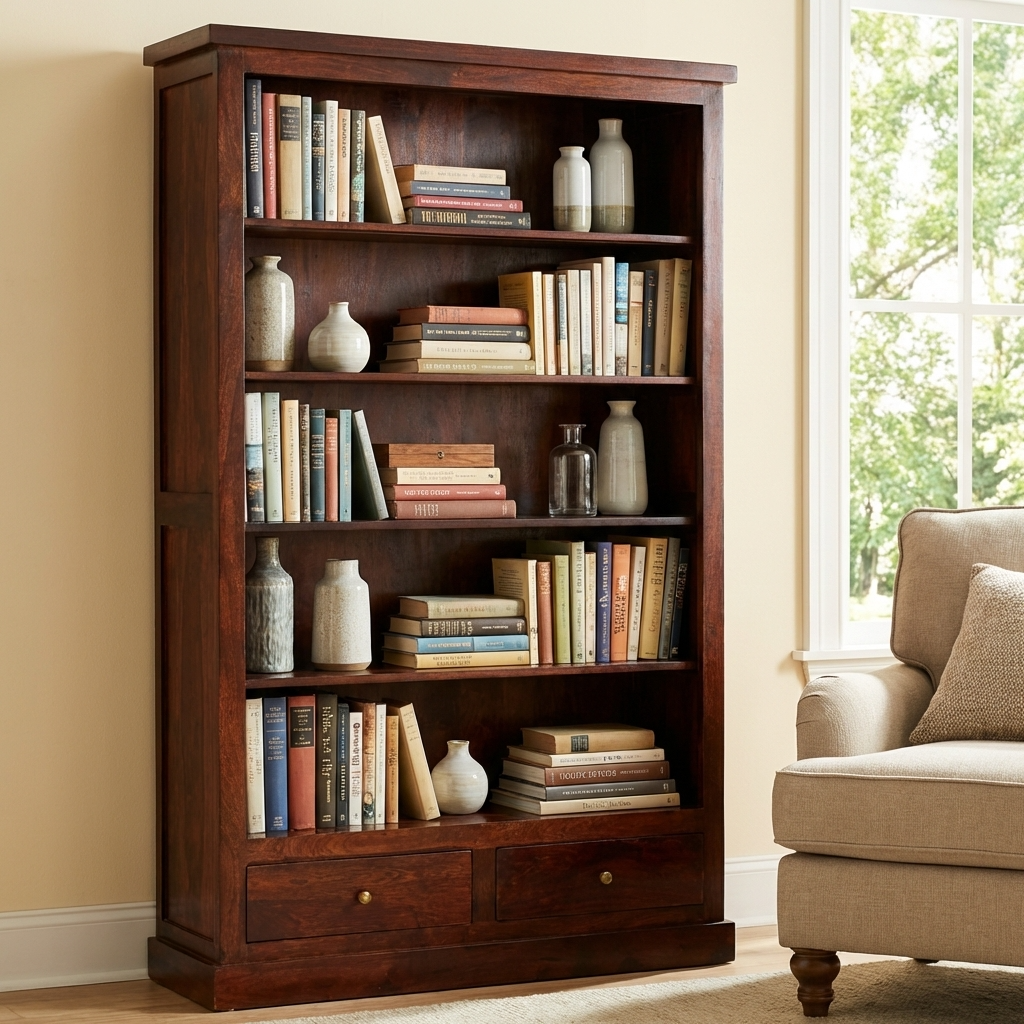
Quick answer: Solid wood bookcases are stronger, sag less and last longer. They also cost more. MDF bookcases are cheaper, smooth and stable, but shelves can bow under heavy books over time. Choose solid wood for large or heavy collections. Choose MDF for light loads, kids' rooms and tight budgets.
Books are heavier than most people think. A single metre of hardbacks can weigh over 25kg. So the material of your bookcase really matters.
The two most common choices are solid wood and MDF. Both have a place. This guide explains the real differences, so you can buy once and buy right.
Key takeaways
- Solid wood is the strongest choice for heavy books.
- MDF is cheaper and very smooth, but less stiff over long spans.
- Shelf sag depends on material, thickness and width.
- Veneered bookcases mix both, with real wood on the surface.
- Damp is MDF's biggest enemy.
- Solid wood can be repaired. MDF usually cannot.
What is the difference between solid wood and MDF?
Solid wood is cut straight from the tree. Common bookcase timbers include oak, mango, acacia and other hardwoods. Every plank has its own grain.
MDF stands for medium-density fibreboard. It is made from fine wood fibres mixed with resin. The mix is pressed into flat, even sheets. It is then painted, wrapped in foil or covered with a wood veneer.
Veneer is a thin slice of real wood glued over a board core. It looks like solid wood on the surface.
1. Is MDF strong enough for a bookcase?
Yes, for most everyday use. MDF is dense and stable. It does not warp easily in a dry room.
The weak point is stiffness. Over time, a loaded MDF shelf can slowly bend in the middle. This is called shelf sag or creep. It is most common on wide shelves full of hardbacks.
2. How wide can an MDF shelf be before it sags?
As a rough rule, keep 18mm MDF shelves under about 80cm wide for heavy books. Narrower shelves stay flatter. A fixed back panel or central upright also helps a lot.
Solid hardwood shelves of the same thickness can span further. They resist bending far better under the same load.
Solid wood vs MDF: side-by-side comparison
| Feature | Solid wood | MDF |
|---|---|---|
| Strength under heavy books | Excellent | Good on short spans |
| Shelf sag over time | Low | Higher on wide shelves |
| Look | Natural grain, unique | Smooth, uniform |
| Weight | Heavy | Heavy for its size |
| Moisture resistance | Fair, with a good finish | Poor if the edges get wet |
| Repairs | Can be sanded and refinished | Hard to repair once chipped |
| Lifespan | Decades | Several years to a decade or more |
| Price | Higher | Lower |
| Best for | Large collections, home libraries | Light loads, kids' rooms, budgets |
Pros and cons of solid wood bookcases
1. Pros
- Very strong and stiff, so shelves stay flat.
- Each piece has its own grain and character.
- Scratches and dents can be sanded out.
- Often lasts for generations.
- Ages well and can be re-oiled or waxed.
2. Cons
- Higher price.
- Heavy to move.
- Can move slightly with big humidity changes.
- Grain and colour vary, so pieces do not match perfectly.
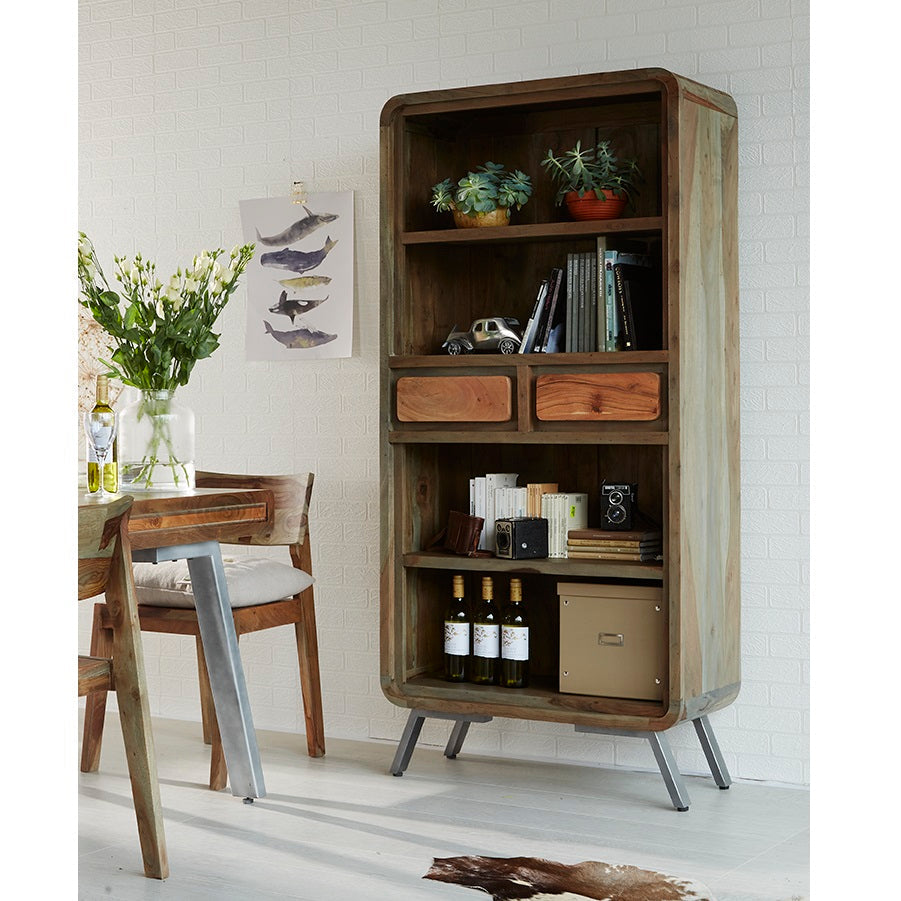
Our Aspen Large Bookcase in Solid Hardwood is built for serious collections. For smaller spaces, the Acorn Solid Oak Small Bookcase is a lovely choice.
Pros and cons of MDF bookcases
1. Pros
- Lower price than solid wood.
- Smooth surface that is ideal for paint finishes.
- No knots or grain variation.
- Stable in dry, centrally heated homes.
- Wide range of colours and modern styles.
2. Cons
- Shelves can bow under heavy loads.
- Swells if water gets into the edges.
- Chips are hard to fix.
- Screw holes can loosen if moved often.
MDF also works well in clever designs. Our Bali Bookcase Headboard Bed uses MDF to build storage into the bed. It is ideal for a stack of bedtime reads.
What about oak veneer bookcases?
Veneer gives you a real wood look for less money. Good veneered pieces often combine a solid wood frame with veneered panels.
The Curve Oak Tall Bookcase is a good example. It uses solid oak and oak veneers. You get the warmth of oak with a more stable, even finish.
Veneer is a smart middle ground. Just avoid deep scratches, as the real wood layer is thin.
Which is better for a home library?
For a dedicated home library, solid wood is usually the best choice. Shelves in a library carry heavy loads all the time. Solid wood keeps them flat for decades.
If your budget is tight, mix materials. Use solid wood bookcases for hardbacks. Use MDF units for paperbacks, games and lighter items.
Want to plan the whole room? Read our guide on how to build a home library you'll actually use.
How to stop bookshelves sagging
Whatever you choose, these tips help shelves stay straight.
- Put the heaviest books on the lowest shelves.
- Place heavy books near the uprights, not the middle.
- Do not overload wide shelves with large art books.
- Flip MDF shelves over if they start to bow slightly.
- Add a central support for shelves over 80cm wide.
- Fix tall bookcases to the wall for stability.
How to tell if a bookcase is solid wood
- Check the product title for "solid" and the timber type.
- Look at the edges. Solid wood grain runs over the edge.
- Repeating, identical grain patterns suggest a print or foil.
- Very light weight for the size can suggest chipboard.
- Ask the retailer. A good one will tell you exactly.
Frequently asked questions
1. Is MDF better than solid wood?
Not overall. MDF is cheaper and smoother. Solid wood is stronger, lasts longer and can be repaired.
2. How long does an MDF bookcase last?
A well-made MDF bookcase can last many years in a dry room. Heavy loads and damp will shorten its life.
3. Do solid wood bookcases sag?
Rarely. Solid hardwood shelves are much stiffer than MDF. Very wide, thin shelves can still bow under extreme loads.
4. Is MDF safe in a child's bedroom?
Yes. MDF furniture from reputable UK suppliers is safe for children's rooms. Always fix tall units to the wall.
5. Is MDF better than chipboard?
Yes. MDF is denser, smoother and holds screws better than chipboard. It also has cleaner edges.
6. Is solid wood worth the extra cost?
For a large or growing book collection, yes. Solid wood keeps its shape and looks better with age.