Cart
0
Why the Material of Your Bed Frame Matters
When most people shop for a bed, they focus on size, style, and price. But the material your bed frame is made from has a huge impact on how long it lasts, how it looks over time, and whether it's worth the investment. The two most common materials you'll encounter are solid hardwood and MDF (Medium Density Fibreboard). Here's what you need to know about each.
What Is Solid Hardwood?
Solid hardwood is exactly what it sounds like — timber cut directly from hardwood trees such as oak, ash, or beech. Each piece is a single, natural plank of wood with its own grain, character, and strength. It's the material used in heirloom furniture that gets passed down through generations.
At Havenheim, our Astley Solid Hardwood Bedroom Range is crafted from genuine solid hardwood throughout — not just on the visible surfaces, but in the frame construction itself. That's what gives it its weight, rigidity, and longevity.
What Is MDF?
MDF is an engineered wood product made by binding wood fibres together with resin under heat and pressure. It's smooth, consistent, and easy to paint or veneer — which is why it's widely used in flat-pack and budget furniture. MDF isn't inherently bad, but it has real limitations when used in bed frames that need to bear weight and withstand daily use.
Solid Hardwood vs MDF: The Key Differences
Durability
Solid hardwood is significantly stronger and more durable than MDF. It can bear heavy loads without flexing, resists knocks and dents better, and doesn't deteriorate in the same way over time. MDF, by contrast, can swell if exposed to moisture, chip at edges, and weaken at joints over years of use. A solid hardwood bed frame, properly cared for, can last decades. An MDF frame typically has a much shorter lifespan.
Repairability
One of the underrated advantages of solid hardwood is that it can be repaired. Scratches can be sanded out, surfaces can be refinished, and joints can be re-glued. MDF is much harder to repair — once the surface is damaged or a joint fails, it's difficult to restore without it showing.
Weight and Stability
Solid hardwood is heavier, which is actually a good thing in a bed frame. That weight translates to stability — no wobbling, no creaking, no movement in the night. MDF frames can feel less solid, particularly as fixings loosen over time.
Appearance Over Time
Solid hardwood ages beautifully. The grain develops character, and the finish can be refreshed if needed. MDF furniture tends to look its best when new and can show wear more obviously as time goes on, particularly at edges and corners.
Environmental Considerations
Solid hardwood from responsibly managed forests is a natural, renewable material. MDF contains resins and adhesives that make it harder to recycle at end of life. If sustainability matters to you, solid hardwood is generally the better choice.
Price
MDF furniture is typically cheaper upfront, which is its main appeal. But when you factor in longevity, a solid hardwood bed frame often represents better value over time — you're less likely to need to replace it.
When Might MDF Be Acceptable?
MDF can be a reasonable choice for low-use guest rooms, temporary accommodation, or situations where budget is the primary constraint. For a bedroom you use every night, or for children's beds that take a lot of wear, solid hardwood is the wiser investment.
Our Recommendation: The Astley Solid Hardwood Range
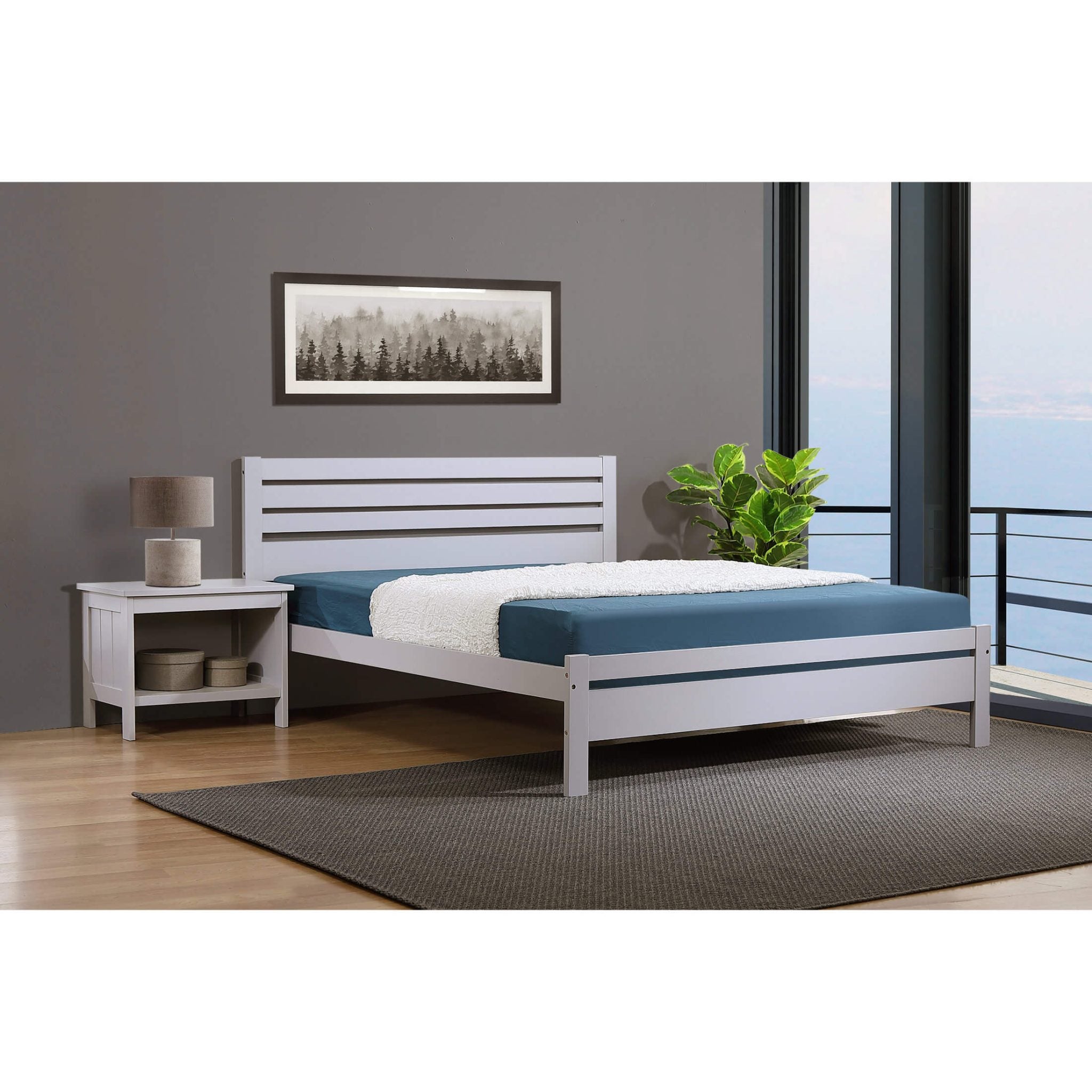
If you're looking for a bed frame built to last, the Astley Solid Hardwood Bedroom Range is our top recommendation. Available in Grey and Antique Oak finishes, and in every standard UK size from single to king, it combines genuine solid hardwood construction with timeless design.
- Astley Single Bed — Grey
- Astley Single Bed — Antique Oak
- Astley 4 Foot Bed — Grey
- Astley 4 Foot Bed — Antique Oak
- Astley Double Bed — Grey
- Astley Double Bed — Antique Oak
- Astley King Size Bed — Grey
- Astley King Size Bed — Antique Oak
Complete the look with matching Astley Bedside Tables in Grey or Antique Oak for a fully coordinated bedroom.
The Bottom Line
If you're choosing between solid hardwood and MDF for a bed frame, solid hardwood wins on every measure that matters for long-term use: durability, stability, repairability, and appearance over time. It costs more upfront, but it's an investment that pays for itself many times over.